

Stressed, Stuck, and Still Gaining Weight? How to Lose Weight After 40 with a Holistic Stress Management Plan
Are you doing all the “right things" and still the scale keeps heading in the wrong direction?
What if the real reason your body is holding onto weight has nothing to do with willpower and everything to do with how stressed your nervous system is?
Here's what I want you to know right up front: Stress is normal. We all have it. Your body’s stress response is its built in safety system. It's doing its best in a world it was never designed for. The goal isn't to erase all stress. The goal is to be more intentional about which stressors we allow into our lives as well as guarding our support systems. I want you to understand what's happening so you can stop blaming yourself and start giving your body what it needs to feel safe enough to release excess weight. I created a series of 5 short videos to guide you:
When you pass through the waters, I will be with you; and when you pass through the rivers, they will not sweep over you. When you walk through the fire, you will not be burned; the flames will not set you ablaze.
Isaiah 43:2
Why Stress Feels Heavier Now (and Shows Up on the Scale)
In midlife, your life load goes up while your buffers go down. It’s the perfect storm:
➡️ Estrogen and progesterone decline, removing your body's natural calming and mood-stabilizing support.
➡️ Technology keeps you distracted, available, and feeling the pressure to respond 24/7, so your brain rarely gets any true down time
➡️ Poor sleep, inflammation, blood sugar swings, toxin exposure, extreme exercise and being sedentary all make your body feel less safe and more reactive.
➡️ You are juggling more than ever. Work, children, marriage, health issues and aging parents.
Your nervous system was designed to handle short bursts of stress with rest in between. But today it gets tiny hits of "threat" all day long: emails, headlines, notifications, comparison scrolling. Without enough recovery, your system stays near red alert. You might feel this as anxiety, irritability, brain fog, hot flashes, weight gain, or feeling like you are one moment away from snapping.
This isn't because you're weak. It's because the load is heavier and your body is less resilient now.
In perimenopause and menopause, falling progesterone removes one of your natural "calm brakes" in the stress response. Progesterone supports GABA (your brain's main relaxation chemical) and reduces cortisol. As progesterone declines, the same life stressors can now trigger more anxiety, belly fat, hot flashes, sleep problems, and weight-loss resistance. Yea!
And here's something most women don't realize: toxin exposure also makes your body feel unsafe. Chemicals in our food, water, air, cleaning and personal care products add to your body's total stress load. When your liver and detox pathways are overwhelmed, your body holds onto weight as a protective mechanism.
This is why ‘just eat less and move more’ so often fails women over 40. If your body believes it’s in danger, it will fight to keep weight on, no matter how hard you try. It’s not your lack of effort; it’s your body listening to the powerful danger signals it's being sent.
How Cortisol Drives Belly Fat
Your body has two main modes: stress mode (fight or flight) and rest mode (rest, digest, repair). With chronic stress and hormone shifts, many women get stuck in fight or flight which leads to:
➡️ Cortisol triggering fat storage. Chronic stress keeps cortisol higher, which tells your body, "Store belly fat in case of emergency."
➡️ More cravings. Your brain wants quick fuel, so you crave sugar, chips, bread, and comfort foods, especially at night.
➡️ Slower metabolism. When your body thinks you're in danger, it quietly turns down thyroid and reproductive hormones to conserve energy. This can leave you tired, cranky, puffy, and stuck.
➡️ Gut and inflammation issues. Digestion gets down-regulated, so bloating, IBS, and reflux flare may flare. Inflammation is a natural part of the stress response but when it’s prolonged it’s perceived as another stressor.
➡️ Accelerated aging, higher blood pressure, insulin resistance, and down-regulation of hormones your body considers "non-essential" in survival mode.
Want to go deeper? You can learn more about the types of stress, and take the ACE assessment and the Perceived Stress Scale to get a clearer picture of where your stress is coming from HERE , HERE and Learn how to use purpose to manage stress here.
Do not be anxious about anything, but in every situation, by prayer and petition, with thanksgiving, present your requests to God. And the peace of God, which transcends all understanding, will guard your hearts and your minds in Christ Jesus.
- Philippians 4:6-7
How Your Brain Can Help Or Hurt You
Your Thoughts Can Keep Your Body in Survival Mode
We have tens of thousands of thoughts a day, and most are negative or fear-based. The shows you watch, the feeds you scroll, the internal dialogue you have, all carve physical neural pathways in your brain.
➡️ What you think about most shapes what you believe
➡️ What you believe shapes how you feel
➡️ How you feel shapes what you eat, how you move, and how you care for yourself
If your most frequent thoughts are "I'm a failure" or "I have to do more to prove my worth” those become deep neural pathways (think deep rut on a dirt road) or automatic thoughts. Over time, those thoughts become strongholds: lies we've been exposed to so long they feel like truth. They drive anxiety, comfort eating, quitting on yourself, and all-or-nothing cycles.
Your Brain Doesn’t Want You To Change (Even When You Do)
Your brain's first job is to keep you alive, not to help you reach your goals.
From your brain's perspective:
Familiar thought pathway = predictable = safe = easy/automatic
New thought pathway = unknown = possible threat
That's why it's so easy to fall back into the same evening snacking, the same scrolling, the same "I'll start Monday" or “ work a little longer” cycle.
The encouraging part? Your brain can change. Every time you choose a new thought or a different routine, you're carving a new neural pathway. Do it once and it feels awkward. Do it dozens of times and it starts to feel like the new normal. This is what Romans 12:2 means when it says, Be transformed by the renewing of your mind."
Therefore I urge you, brethren, by the mercies of God, to present your bodies a living and holy sacrifice, acceptable to God, which is your spiritual service of worship. And do not be conformed to this world, but be transformed by the renewing of your mind, so that you may prove what the will of God is, that which is good and ]acceptable and perfect.
Romans 12:1-2
Tools for managing stress:
Now I know you are probably thinking I was going to lead with some device or supplement but I’m not and here’s why. Our body has basic needs and when those aren’t met no device or drug will overcome those. Also, I am a big fan of simple. Start with the basics and work your way up IF you need to.
Less is more
Modern life floods us with information and often we do a poor job of filtering out things that don’t serve us, leaving us distracted, overwhelmed and unfulfilled. We have to set boundaries that serve us in the season of life we are in. Try using your purpose and priorities as the litmus test for what you allow into your life. Take note of what stresses you for a few days, then ask: do these things align with my purpose and priorities? If not, consider bidding them adieu! Read more about using purpose to manage stress here.
Take Your Thoughts Captive so they don’t take you captive
Notice and name limiting beliefs or lies that play on repeat because they are exhausting!
Replace the limiting belief/lie with the truth of God’s word
Example: ("Nothing works for me" or "I'll always be this size")
Philippians 1:6 says he who began a good work in you will bring it to completion or
Philippians 4:13 says I can do all things through Christ who gives me strength.
Say it out loud 2-3 times as you do your daily breath work or any time you struggle. Watch this Video on how behavior follows belief.
Practice Gratitude
Name/journal/talk about three things you're grateful for every day. It turns down the stress response and trains your brain to look for what’s right instead of what's wrong. You'll feel calmer, happier, and more resilient, even when you're stressed.
Give your body more of what it needs and less of what it doesn’t
It’s important to understand your body sees excesses and deficiencies as stress so priority #1 is to begin to restore balance.
More sleep with a steady sleep window and screens off 1-2 hrs before bed
Learn more about these articles called the magic of sleep and sleep your secret weapon for weight loss
More nutrients from whole foods that include protein, plants, healthy fats, and fiber (anxiety can be caused by unstable blood sugar) learn more HERE
Less toxin exposure (your body sees it as a threat even when you don’t)
More stable hormones - Talk with your provider about testing your hormones. The Dutch Test is one of my favorites!
More Movement
Resistance training is the best type of exercise for anxiety and mood. 2-3 short sessions per week supports metabolism, muscle, and insulin sensitivity
Moving every hour improves mood, reduces stress and supports metabolism (try setting an alarm on your phone or desk top)
Movement add on:
Pilates and other gentle movements paired with intentional breathing are especially effective for women with trauma history. Pair your movement with coherent breathing
You can do all things through Christ who gives you strength -Philippians 4:13
Breath Work:
Coherent Breathing - The MOST effective type of breath work
Inhale gently through your nose for about 5-6 seconds, exhale slowly for about 5-6 seconds. Continue for 5-10 minutes, once or twice a day. This trains your nervous system to stay calmer and builds your heart rate variability (HRV), one of the best markers of nervous system resilience.
Coherent breathing add on’s :
Legs up a wall - Lie on your back with your legs resting up against a wall
Pair breathing with scripture - inhale "I can do all things” exhale "through Christ who gives me strength"
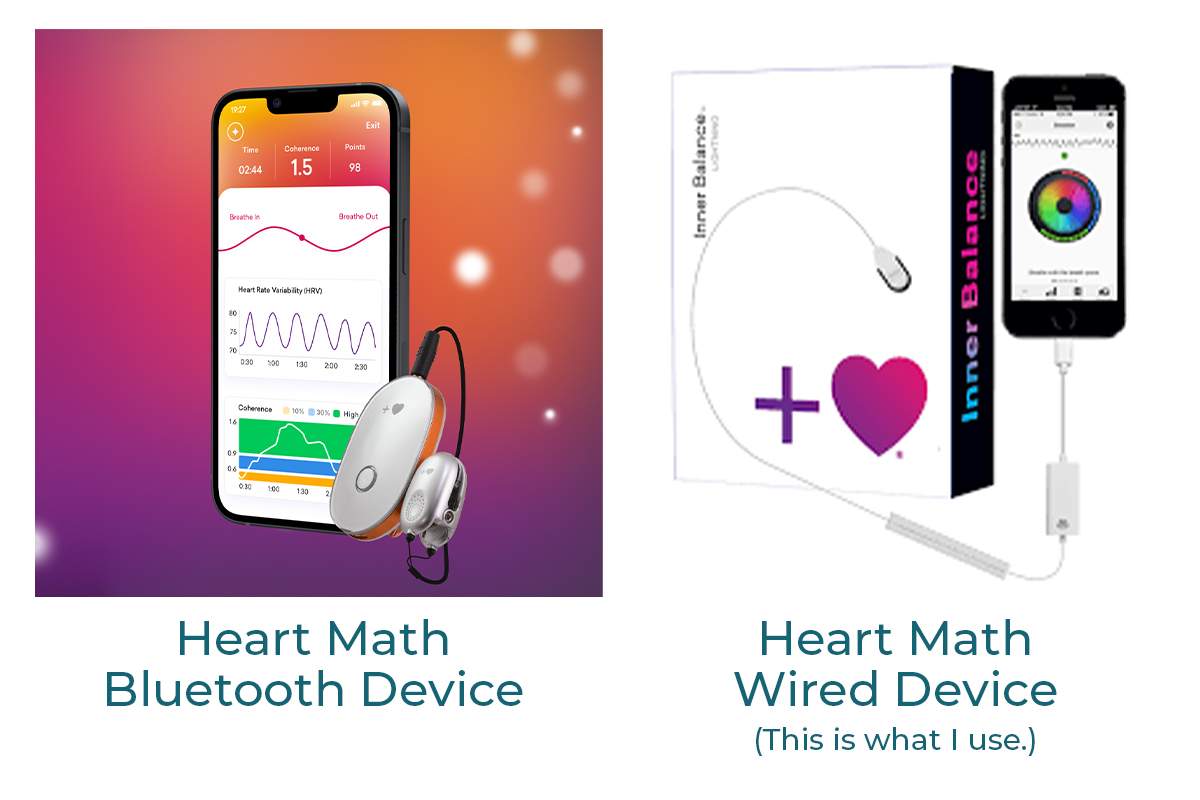
HeartMath (coherent breathing with feedback via a device)
A small sensor and app shows how effective your coherent breathing is and how your nervous system is responding in real time.
Studies show the following improvements in 6-9 weeks:
46% drop in anxiety
56% drop in depression
30% better sleep
If feedback keeps you motivated, this is a game changer. (I use it daily)
Learn the heart math quick coherence technique HERE and HERE
Physiological Sigh (your "emergency brake")
When stress spikes or cravings take over: inhale through your nose about two-thirds full, take a second small sip of air through your nose, then exhale slowly and completely through your mouth like a long, relieving sigh. Repeat 3-10 times. This quickly shifts your body out of high alert so you can respond instead of react.
EFT/Tapping
Includes gently tapping on specific acupoints while focusing on specific stressors.
➡️ Sends signals to the brain to calm the fight or flight response
➡️ Reduces cortisol by up to 43%, anxiety, depression, PTSD symptoms, and pain
➡️ Reduces food cravings and supports weight loss
Want to learn more:
➡️ See the science HERE
➡️ Try Tapping for Releasing Stress and Overwhelm HERE
Vagus Nerve Toning
The vagus nerve shifts your body out of fight or flight into rest and digest. You can strengthen it with things like humming, singing, gargling, laughing or cold exposure (end your shower with cool water or put your face in a bowl of ice water for 30 seconds)
This will enable you to recover from stress more quickly. Monitor your HRV it will go up as vagal tone goes up!
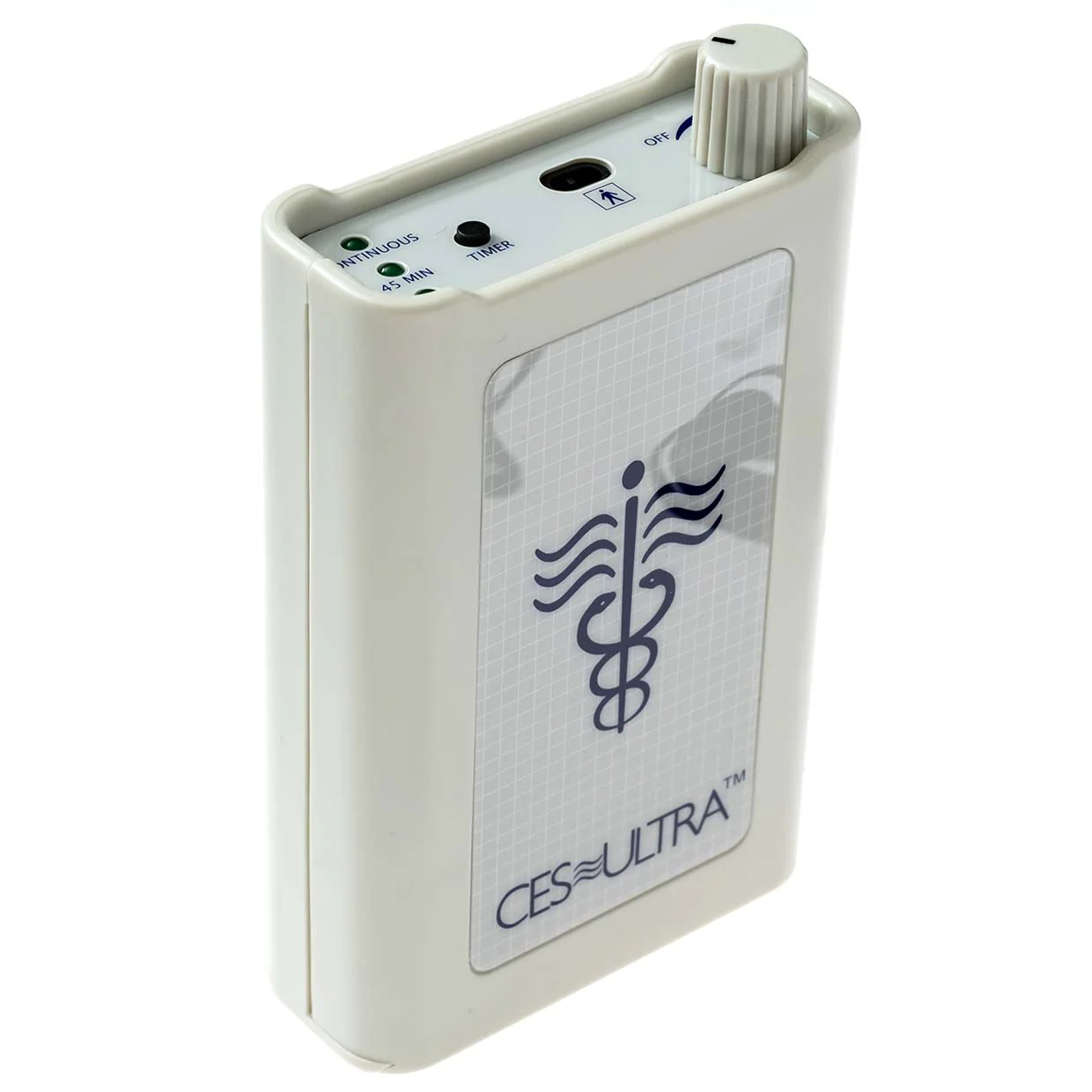
CES Device
The Cranial Electrotherapy Device is an FDA cleared medical device for the treatment of anxiety and insomnia. Simply clip it on your ears for 20 minutes and go about your day! (I use this as well.)
LifeWave X-39 - Phototherapy Patch (I use it daily)
Supports:
Mental clarity (I felt it in 2 hrs!)
Energy, strength and stamina
Mood
Sleep quality

Lifewave - Aeon - The "Happy" Patch (I use it 3-4x wk)
Supports:
The stress response
Cognition and memory
Adrenal fatigue
Balanced emotions and positive mood
Reduces inflammation

Learn more HERE or Schedule a video call HERE or message me HERE
Oura Ring
The Oura ring is a sleep, activity, stress, readiness, HRV, heart rate, cycle, and nutrition tracker. Seeing your stress decrease and HRV increase helps you see your work is paying off! (I’ve worn one for 3 years.)
Supplements
Magnesium glycinate or threonate
L-Theanine
Omega 3’s
Ashwaganda
Saffron, passion flower, kava, lavender
Phosphatidylserine
** Please note even supplements and plant based products can interact with medication so it is important to talk to you provider BEFORE making changes.
Get 20% of professional grade supplements HERE!
Trust in the Lord with all your heart and lean not on your own understanding; in all your ways submit to Him, and He will make your paths straight.
-Proverbs 3:5-6
A Simple Starting Plan
If all of this feels like a lot, start small pick 1 thing that you could easily fold into your day:
Try breath work while you have your morning coffee/tea or on your commute
Sing to music while you get ready or on your drive
Have a salad for lunch
Add walking or stretching after lunch
Talk about what your grateful for over dinner
Mentally review your day:
What were your stressors? Are there any you could eliminate or reduce?
What lies or limiting beliefs popped up for you? Find a scripture that speaks truth to the lie.
Turn your screens off 1-2 hours before bed
Wear a CES device while you get ready or read a book before bed
The goal is not perfection! The goal is to gradually increase the things that support your body and decrease those that don’t.
Remember You Are Not a Failure. You Are Overloaded.
If you see yourself in any of this, you are not a failure. Your nervous system has been working overtime to protect you.
Your body was designed to heal when you give it more of what it needs and less of what it doesn't.
As stress comes down and safety goes up, your body will find it much easier to release weight. What do you have to lose but stress?
No, in all these things we are more than conquerors through Him who loved us.
-Romans 8:37
Your Next Step
Want to know more about how to support wellness and weight loss?
Try my FREE Wellness and Weight Loss Tool - It looks at your health holistically and shows you exactly where to focus first.
➡️ Click HERE to get the free tool!
➡️ Looking for a higher level of support? Book a FREE discovery call to discuss 1 on 1 coaching HERE.
➡️ On Line Wellness Based Weight Loss Course Coming Soon! Click HERE to be notified when enrolment opens!


