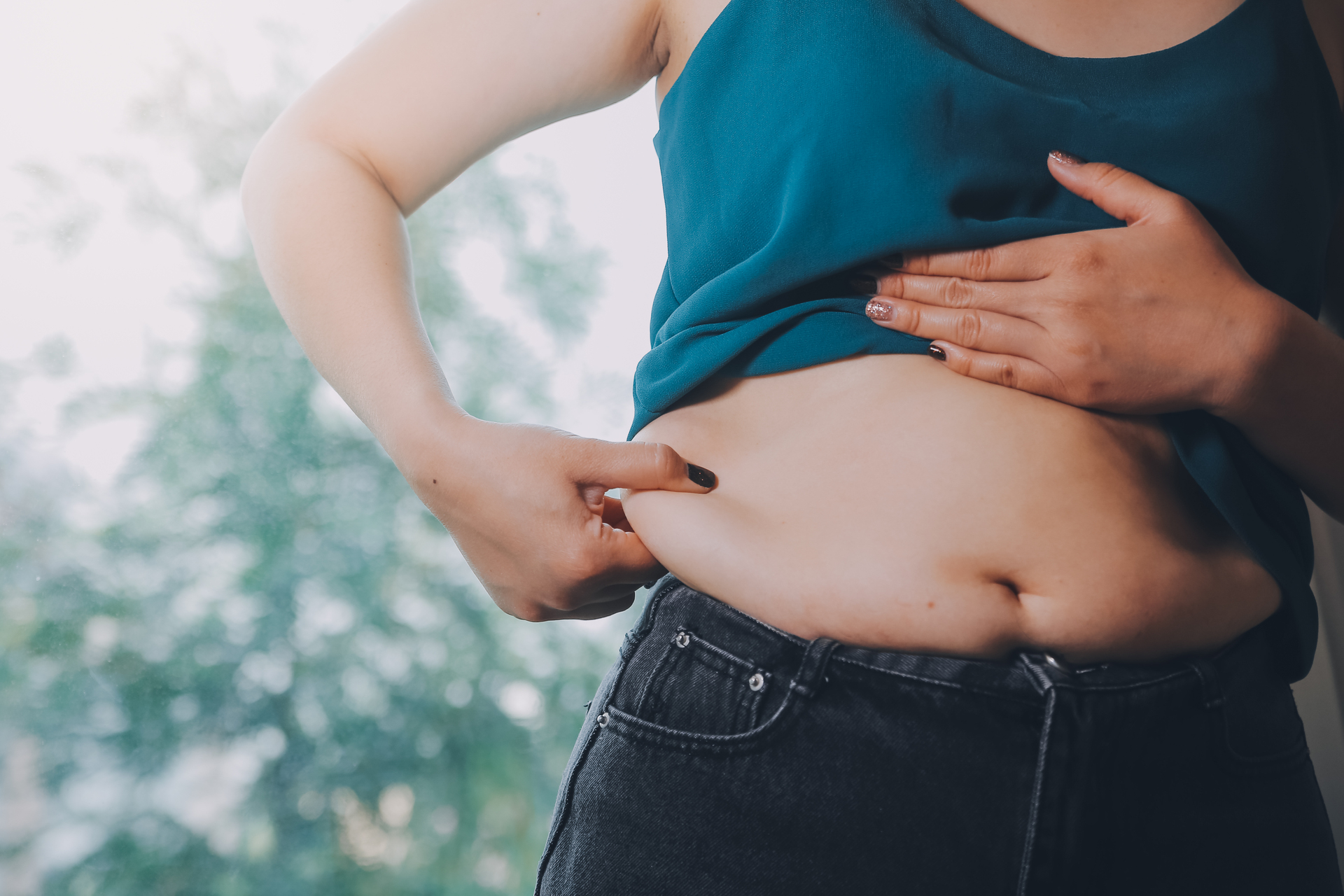
What's Up With This Midlife Muffin Top? What Women Over 40 Need to Know
The diet and exercise routine that worked perfectly in your 30s is now completely ineffective. Same food, same exercise, completely different results.
If this sounds familiar, you're not alone. And more importantly, you're not the problem.
Middle aged women have the highest obesity rate of any age group at 46%. After menopause, women face double the risk of metabolic diseases including cardiovascular disease, diabetes, and fatty liver disease. And here's the statistic that should make you question every diet you've tried: 93% of Americans are metabolically unhealthy.
We all know our bodies change in our 40s. But most of us don't fully understand what's happening or what to do about it. Today I'm breaking down exactly what's happening hormonally and metabolically in your body after 40, and why you need a completely different approach to wellness and weight loss.
Why the Old Approach Stops Working
Your body after 40 has fundamentally changed:
Your hormones have shifted dramatically. Your metabolism has slowed. Your insulin sensitivity has changed. You're losing muscle mass. You're likely more sedentary due to desk jobs and screen time. Stress has likely increased as you're managing kids, aging parents, and career demands. And your sleep quality has declined.
But the advice? It stays the same.
"Just eat less and move more." "Try 1200 calories and cardio." "You just need more discipline."
So you do what worked before. You cut calories. You add more exercise. You push harder.
And it either doesn't work at all, or you lose 10 pounds and gain back 15.
Then comes the shame: "What's wrong with me? I used to be able to do this. Maybe I'm just meant to be this weight."
What I want you to know is that approach COMPLETELY ignores the hormonal shift happening in your body. Your body has changed. It needs different support now. Weight gain after 40 is a sign your body is out of balance and needs support, not punishment.
The Three Hormones Driving Weight Gain After 40
Let me explain exactly what's happening inside your body.
Estrogen: The Master Regulator
When estrogen is functioning normally, it controls where you store fat (hips and thighs, not your belly). It supports healthy metabolism and regulates your appetite. It helps you sleep well. It supports neurotransmitter production, cognition, and your stress response. It even helps maintain bone density!
But when estrogen drops after 40, everything shifts:
Fat redistributes to your belly (the dangerous visceral fat).
Insulin resistance develops, making it harder to regulate blood sugar and easier to store fat.
Sleep becomes disrupted (hello, 3am wake-ups).
Hunger increases and cravings spike.
The result? You eat the same amount you always have, but your body is managing it completely differently.
Progesterone: The Calming Hormone
Progesterone is responsible for so much more than reproduction. It supports neurotransmitter production and protects brain function. It calms your nervous system and helps you handle stress. It supports deep, restorative sleep. It regulates blood sugar and supports immune function. And critically, it balances cortisol.
When progesterone declines:
You feel more anxious and overwhelmed.
Sleep becomes less deep and restorative.
Cortisol rises (and high cortisol equals belly fat).
The result? More stress, less sleep, more belly fat.
Cortisol: The Stress Hormone
Here's where it gets really problematic. After 40, cortisol tends to RISE while estrogen and progesterone DROP.
High cortisol drives belly fat storage because your body thinks you're in danger. It creates insulin resistance, so your body stores calories instead of burning them. It breaks down muscle (which you're already losing). It increases sugar cravings. And it disrupts sleep even further.
The Perfect Storm:
Low estrogen + Low progesterone + High cortisol = stubborn weight gain around your middle that won't budge with traditional dieting. Hello muffin top!
Your Metabolism Has Changed Too
On top of the hormonal shifts, your metabolism slows by 5% per decade after 40. You lose 3-8% of muscle mass per decade. Less muscle means fewer calories burned at rest.
The result? You eat the same amount you always have, but now you gain weight.
Why Extreme Dieting Makes It WORSE
Here's what most women don't realize: severe calorie restriction actually makes everything worse.
When you drastically cut calories:
Your metabolism slows even further.
Cortisol rises because your body thinks it's starving.
You break down muscle (which you're already losing).
You set yourself up for rebound weight gain.
You end up worse than when you started.
This is why the diet-regain cycle is so common. You're not failing. The approach is working against your body's biology.
What Your Body Actually Needs Now
Your body after 40 is going through major changes, and these changes are a BIG stressor. Your body can't compensate the way it used to. It needs support, NOT more stress.
You might be told you need hormone replacement therapy, and that may be true eventually. It’s always wise to consider giving your body the opportunity to restore balance on its own first. You may need less HRT or none at all when you support your body holistically.
Remember, no drug will ever overcome the way we live. So I always encourage women to consider looking at lifestyle.
Your body needs support in the following six essential areas.
1. Sleep (Non-Negotiable)
Poor sleep equals high cortisol and high blood sugar, which equals belly fat. When you don't sleep, your hunger hormones go haywire. You will struggle to lose weight without addressing sleep. It isn't optional.
Focus on sleep hygiene practices: get morning sunlight, maintain consistent wake and bedtime, calm your nervous system with breathwork, tapping, singing, or laughing, and turn down lights and turn electronics and WiFi off.
2. Stress Management (The Hidden Driver)
Chronic stress keeps cortisol elevated. High cortisol means your body stores belly fat. You can eat perfectly and still gain weight if stress isn't addressed.
Talk to your provider about ways to support your body with things like electrolytes, adrenal cocktails, adequate carbohydrates, and adaptogens like ashwagandha or glandular supports. Reduce actual stressors where possible and address unresolved trauma. Practice breathwork, singing, laughing, and movement.
3. Real Food (Not Restriction)
Don't restrict! Upgrade the quality of your food from ultra-processed to whole foods.
Your body needs nutrients to make hormones. Severe restriction tanks your hormones further.
You need:
protein to maintain muscle
healthy fats including cholesterol to make hormones
fiber to eliminate excess estrogen and toxins
More nourishment, less restriction
4. Movement (Build, Don't Just Burn)
You're losing muscle after 30. Muscle burns more calories at rest. So the focus needs to shift: build muscle, not just burn calories. Remember strength training increases metabolism and cardio decreases metabolism.
Strength training is more important than endless cardio Opt for movement that supports your metabolism instead of exhausting you. Move every hour. Try movement instead of defaulting to screens. If you are exhausted the day after your workout you have done too much. Remember the hormonal shifts you are having are a big stressor so we have to be careful about the additional stressors we add (even exercise) Bottom line... listen to your body!
5. Reduce Toxins
Environmental toxins disrupt hormones. They actually cause your body to store fat (they're called obesogens for a reason). These endocrine disruptors can mimic estrogen and confuse your body.
Common sources include plastic, personal care products, household cleaners, water, and air. In fact, air quality accounts for about 80% of our toxin exposure.
Start with what you use every day. As products run out, replace them with cleaner options. Small changes equal big impact. EWG.org is a great resource for finding cleaner options.
6. Mindset
Approach your body with compassion. Stay connected to the Lord and learn to honor what your mind, body and soul need. This is about stewarding your body well through this season, not pushing it to perform.
The Comprehensive Approach: All Six Areas Together
Here's what happens when you address sleep, stress, movement, nutrition, mindset, and toxin exposure together:
You give your body the opportunity to restore balance
Sleep improves, cortisol drops, belly fat decreases
Stress decreases, hormones balance, cravings and belly fat decrease
Whole foods improve blood sugar regulation and hormone function
Building muscle increases metabolism and makes it easier to maintain weight
Reducing toxins allows hormones to function properly and your body releases weight
Mindset shifts from punishment to honor, creating sustainable choices
Your body CAN thrive after 40 when you give it what it actually needs:
More rest, less stress
More nourishment, less restriction
More movement that heals not hurts
Less toxin exposure
When you give your body more of what it needs and less of what it doesn't that’s when it RELEASES the weight, TRANSFORMS your health, so you can RECLAIM the vibrant, abundant life you were created for
Your Body Isn't Broken
Your body after 40 is not broken. It's hormonally and metabolically different. It needs different support.
The women who succeed after 40 understand what's happening hormonally and metabolically. They listen to their bodies. They support their bodies holistically. They stop restricting and start restoring.
Your Next Step
Ready to find out where to start?
Take the FREE Wheel of Wellness Assessment
This personalized assessment shows you which of the six essential areas needs your attention first. It takes just 5 minutes and gives you a clear starting point tailored to YOUR body.

Join the Waitlist for Wellness-Based Weight Loss After 40
This comprehensive program addresses all six areas holistically, provides support for your changing hormones, and includes a community of women walking through the same season.
We stop restricting and start restoring. Together.
Your body after 40 CAN release weight when you understand what's happening and give it the support it needs.
Disclaimer: This content is for educational purposes only and is not medical advice. Please consult your healthcare provider before making any changes to your health routine.


